
By Tallon Smith
Up on the Mid North Coast of New South Wales, where the Macleay River flows out to the pristine Pacific Coast, lies the medium-sized town of Kempsey.
With a population of 15,000 arranged in an odd layout of sprawling streets surrounding a riverside Central Business District, the town lies on the lands of the Dunghutti people.
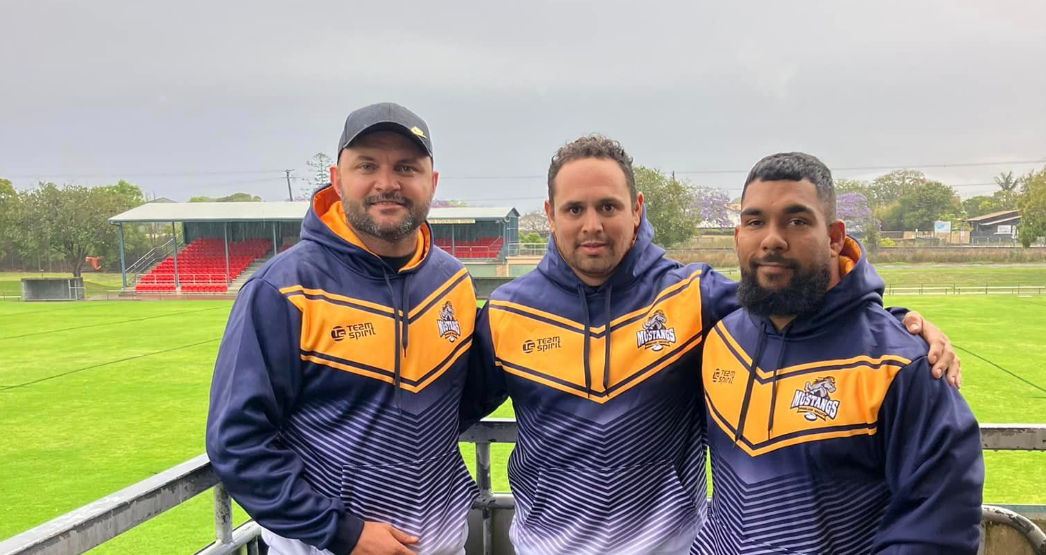
Aside from its day job of appearing as a sleepy country town, Kempsey is a rugby league nursery, with many talented professional players emerging from the Macleay Valley Mustangs.
Originally zoned to Group 2, and predated by the Kempsey Dragons (which the local junior club is still named), the club moved to Group 3 after taking out a final premiership in Group 2 in 2012.
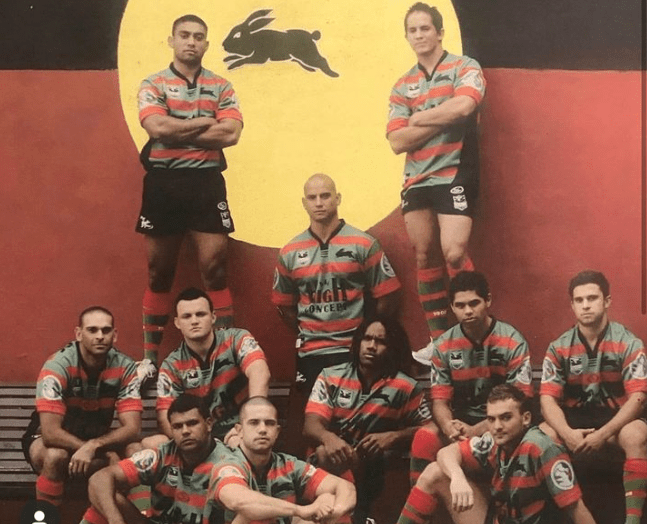
Enter Beau Champion, former Rabbitohs, Storm, Titans and Eels centre, Indigenous All-Star, and now resident of Port Macquarie.
A proud Dunghutti man, Beau’s family originally hails from the region, and after a brief stint as a real estate agent following his retirement, now operates another business in the Port City.
Aside from his day job, Beau is also a dedicated community man, running a program at a local prison, and coaching the Macleay Valley Mustangs.
However, unlike most ex-NRL stars coaching country teams, Champion’s motivation is not to win titles, but to lead the Kempsey community on a path of betterment both on and off the field.
“I moved up to Port Macquarie and I have a business that I operated here about 18 months ago, and then the opportunity came up to coach the Macleay Valley Mustangs,” he said.
“Again, my motivation behind that was more so community based, and to also help the team be successful on the field, but more so bring the community together off the field.
“So it was a two pronged attack and yeah, it’s been going really well so far.”

Despite all of his achievements in a decade-long career in the upper echelons of the game, Champion views himself as equal to everyone else in the club and community, with his primary goal being to pass on both the footy and life lessons he gained experience from.
“I think the benefit of being around different clubs is you get to meet a lot of different people, and a lot of special characters and special individuals within each of the clubs, and then also be coached by different coaches as well,” he said.
“So you get to understand different ways of doing things and also understand that different clubs are at different positions within their time frame.
“Then also you get to understand how to handle the team in all situations I suppose, because some of the teams are very successful and some of the other clubs again not so much.
“So you take each of [those] experiences and try to bring them on board within the group that you have, and then also try to work with the individuals that you have and the style of play that you want.
“So I hope [that] I can sort of pass on some of that knowledge onto the men, and then also help them off to deal with some of the things that I’ve had to face and to overcome some of the obstacles or barriers that they may be facing within their own lives.”
Being a small town club without the grandiose means to attract star players, the Mustangs have had to rely on locals to fill the jerseys every week, but that true bush footy authenticity is exactly how Champion likes it.
“Yeah, well, the number one thing is we aren’t a club that are able to financially reward or recruit players from outside to bring them in, so what we have to do is have individuals that really want to play for their community and want to play for their club,” he said.
“I think if you do get that, you do get a lot of buy-in.
“The club did have a pretty successful year last year, I think they finished fifth but ended up playing in the game to go into a grand final, [but] unfortunately, weren’t able to do that.
“But again they had a core group of young men who got to experience that, and I think just moving forward it was again about building on last year and learning from last year and then being able to be more consistent this year and really understand what sort of football worked for them.
“We didn’t start the season too crash-hot, we started the season one win and two losses, but since then we’ve been able to win six of our last seven.
“The main thing is that you get the young men wanting to play for the Jersey and wanting to play for each other, and if we’re willing to work hard and work on the discipline side of the game and stick into the process of the game, the rest of it sort of takes care of itself.”
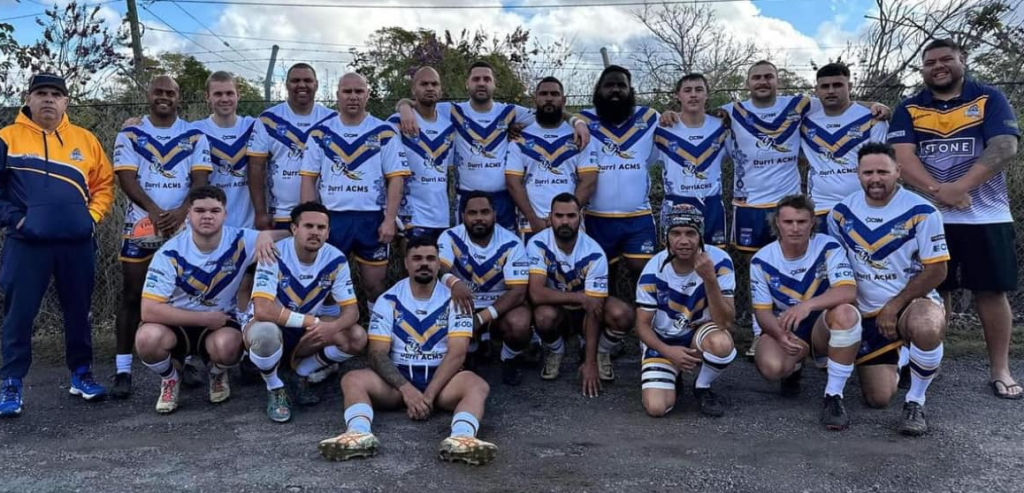
As for the players, Champion said they continue to improve each and every week as they move towards finals, with a sense of camaraderie and a culture of respect and equality building across the entire club, starting with the First Grade coach.
“I think the players understand that I’m there to try and help them, we’re all on the same level,” he said.
“I don’t come in there from, because I’ve had an NRL background or because I have played in the NRL that I know more than them or I demand any more respect than they do.
“So I think they appreciate that, and over time they’ve understood that I’m trying to help them become better football players, not just now but for the rest of their football careers and then also trying to help them again be better [and] fulfil their potential on the field and also off the field as well.
“As I said, I’ve seen a real change, a real energy around their football, and then also a lot of the off field stuff as well, which again, it’s a work in progress, but you’ve got to start somewhere.
“So yeah, I’m passionate about it, and I feel that they’re really passionate about their football.”
As for his work in the Mid North Coast Correctional Facility, as detailed in Fox League’s Face To Face program, Champion said the principle is much the same, in showing the inmates that people care, and that there is always an opportunity for change.
“I think it’s just one part of the work that I do in community and again, it’s just showing individuals that there is someone that cares, there is someone that is able to try and help,” he said.
“As I said, I just try and use my experiences through different parts of life or through different areas to just try and assist and help them in some way.
“A lot of it is just around a mindset, if you can change some of the individual’s mindset and the way that we think, then it gives us an opportunity for change.
“My goal and objective is to help one individual, you help one individual at a time that then can help their family or help their child or to break the cycle as well, so it’s not an easy process.
“But again, if you have multiple people in different communities doing similar [things to] what I’m doing, it all adds up over time.
“So as I said, it’s only a small role that I play, but if it helps one individual or makes one change, then that’ll be, again, a snowball effect as years and years go by.”
Although his career in the top flight ended just shy of a decade ago, and his footy card (of which this author proudly possesses) is slowly becoming one for the collectors, Beau Champion continues to remain a positive influence on both the game he played and the community he loves.
The game is much more than thirteen men, women or children passing and kicking a ball around inside four white lines every weekend, it is a vehicle for change, the glue for communities, a ray of hope.
Bush Footy is our game, and it’s people like Beau Champion that are why it remains such a powerful force for good in the lives of regional New South Welshmen.
 Battlers For Bush Footy