
Tallon Smith
As December rolls around, Ben Goodman flips the calendar to an unwanted milestone.
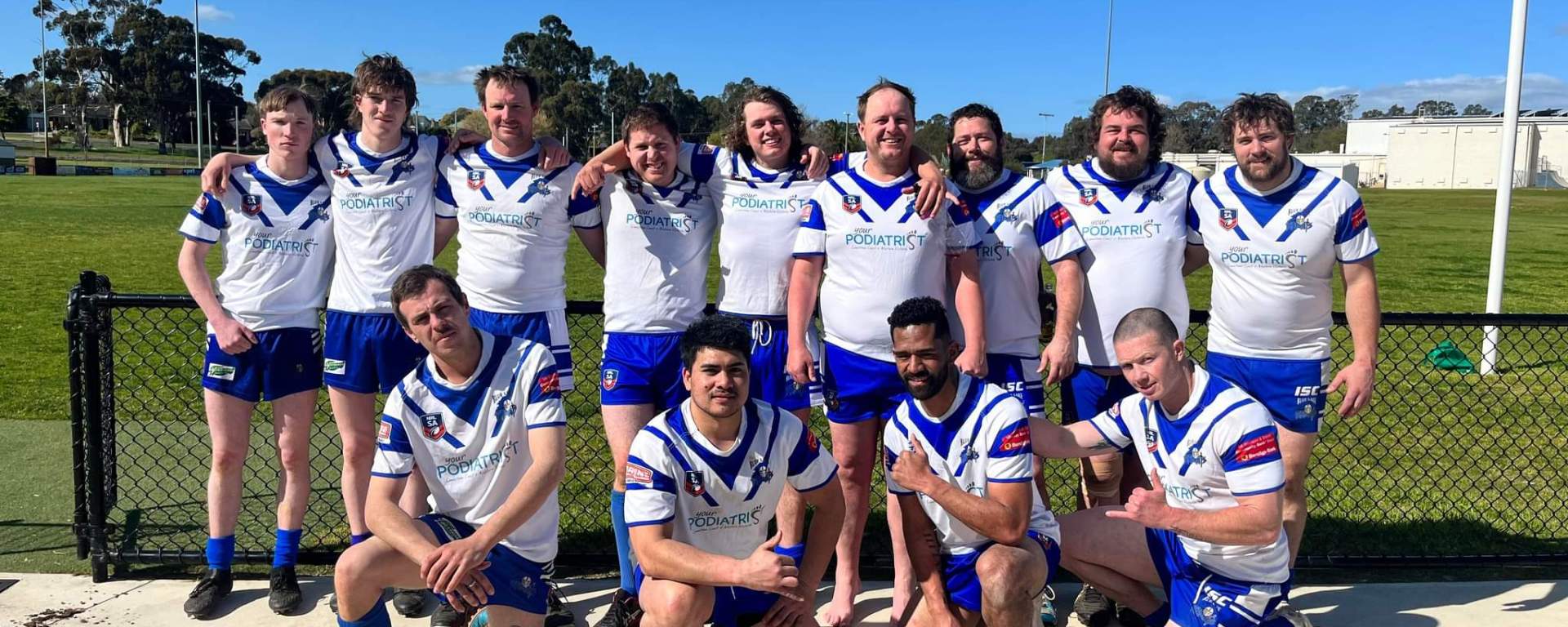
Today, December 17, marks three years since Warrnambool’s Gunditjmara Bulls defeated Stawell Mounties 22-8 in the Grand Final of the Limestone Coast Rugby League, a five-team cross border league featuring three other clubs, another from Warrnambool, and two from SA in Naracoorte Jets and Mount Gambier’s Blue Lake Knights.
Fast-forward three years, and that was the last game of competitive rugby league played in the region, and the Knights remain the only active club.
The President of the Knights club, Goodman remains a passionate advocate for growing the game in Eastern SA and across the border in Western Victoria, but struggles to comprehend how a thriving competition disappeared overnight.
“We were a five team, four town comp, to the point where we’re now a one team, one town league, trying to scratch together enough players to play a nine-on-nine for the fun of it,” he said.
“Four of the five clubs have now formally folded because there is no support or future prospects for them.
“It’s the number one question when anyone new turns up, ‘what size is your comp and how many teams play’, and you’ve got to sit there and explain to them, at the moment, it’s just us.”
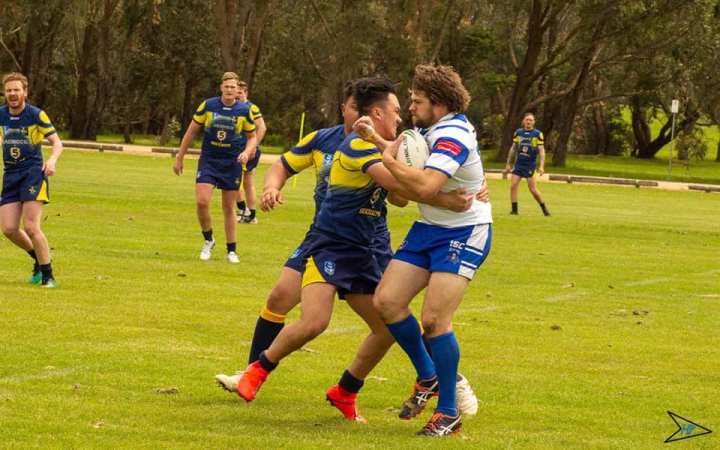
Goodman is the first to admit that there were problems with the Limestone Coast competition.
In covering such a large area, minimising travel with clever draw arrangement was paramount to ensuring the success of the league, which operated with a hub model more like Magic Rounds every weekend than home and away fixtures, similar to the Goulburn Murray Premiership and NSW’s Western Riverina Community Cup.
However, a combination of excessive travel due poor fixturing and decisions at a state governing body level led to the Victorian clubs suddenly splitting away in 2023 to form the Greater Western Storm Premiership, a competition which never got off the ground.
“From all the clubs, their biggest complaint was all the travel and how it wasn’t adjusted to suit, the draw was so poorly done that last time around that it made it too impractical,” Goodman said.
“If you look from Mount Gambier to Stawell, that is two hours and 45 minutes, from Stawell to Warrnambool is two hours and 20 minutes, so there’s 20 minutes difference from what we had [the Limestone Coast competition] to what they had proposed.
“So while travel was cited as a reason, 20 minutes is 20 minutes, when you’re travelling two hours does it really make that much difference?
“I think it ultimately came down to Victoria wanting the numbers on their books, because the competition was SA based, the numbers reflected onto NRLSA and not NRL Victoria for regional football numbers.”
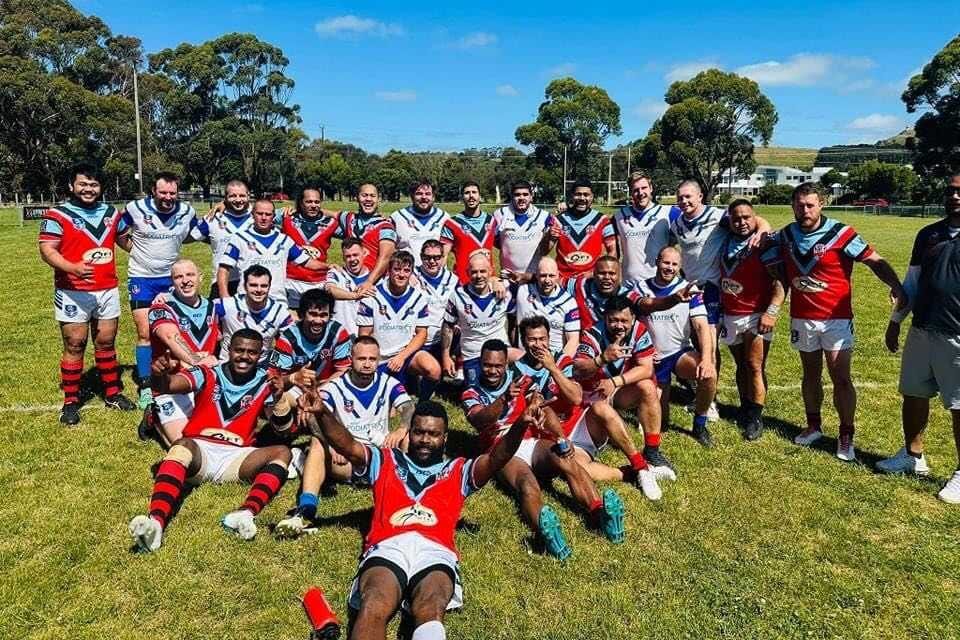
As part of the competition’s shift to Victorian administration, Goodman said that the four Victorian clubs (including Horsham, which was in recess at the time), were mysteriously moved into the new competition without the South Australian teams being notified.
“In 2023, neither the Blue Lake Knights or even the Naracoorte Jets were never notified that the Victorian teams were being pulled into their own league,” he said.
“We got a message from the Bulls saying ‘have you guys seen this draw, you guys aren’t included’, it was just the four Victorian teams.
“That draw was released a week before the first game was scheduled, none of the teams had even been made aware of it.
“Two weeks later, again without us being spoken to, a new draw was released, us included, so they’d released a draw for the Western league, with us included, but hadn’t spoken to us about it, and the game was supposed to start two days after the draw was released.”
Eventually, the decision benefitted nobody, as five of the region’s six clubs folded, leaving the Knights stranded.
This is far from the first time that leagues have collapsed in rugby league’s chequered history in South Australia and Victoria.
An extensive list of former clubs adorn the history books in both states, such as the Gippsland Wildcats, Puckapunyal Seymour, Ballarat Dragons, Horsham Panthers, Yarrawonga-Mulwala Dragons, Cobram-Barooga, Robinvale Storm, Mildura Warriors and Mildura Tigers in Victoria alone, along with the Olympic Dam Barbarians, Port Pirie Pirates, Port Augusta Goannas, Whyalla Steelers and Naracoorte Jets in SA.
Much of the time these clubs, and in the case of the Sunraysia, Central Highlands and Spencer Gulf, whole leagues, have tended to die out in the Affiliated States.
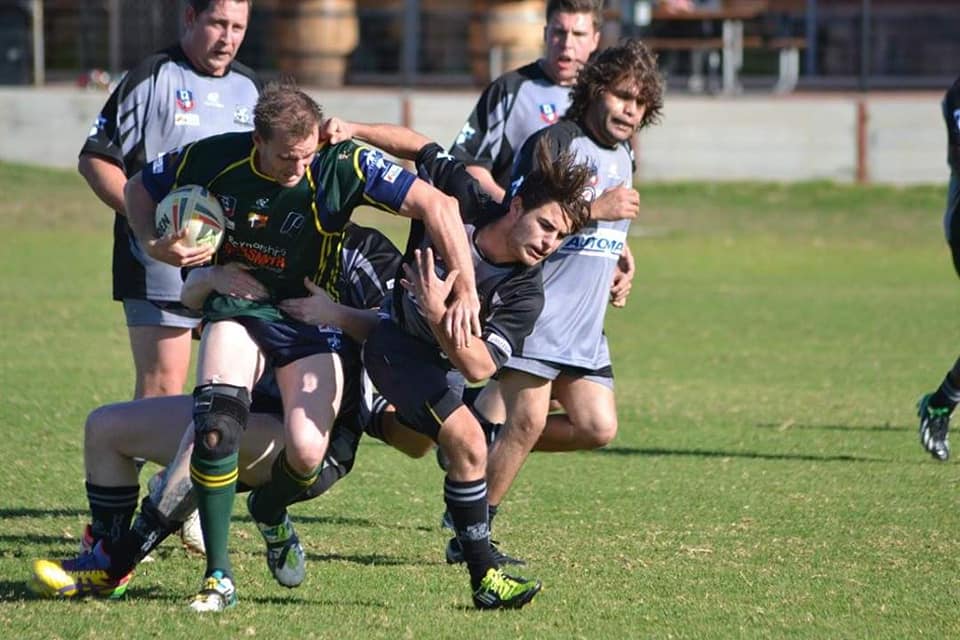
This is not to say the game of rugby league isn’t growing in some parts of the two states, which are governed together along with Tasmania, with NRLSA and NRL Tasmania these days operating as a subsidiary of NRL Victoria.
The Bendigo Crushers played a handful of scratch matches this year before their entrance into the metropolitan Melbourne competition, the Storm Premiership, via third grade in 2026.
Recent start-up clubs in Geelong and Shepparton have also enjoyed varying degrees of success, with the latter claiming back-to-back titles in its first two years in the Goulburn Murray competition.
However, in truth, rugby league in Victoria and SA remains distantly behind the comparative growth of Australian rules in New South Wales and Queensland, while there is no rugby league activity at all currently in Tasmania.
So where is the problem exactly?
NRL Victoria and South Australia General Manager Brent Silva told Battlers For Bush Footy that the main issue is in the resources available to the state body, which are stretched beyond capacity trying to cater for the code’s massive recent growth in metropolitan Melbourne.
“NRL resources are currently metro based and already stretched beyond capacity to service the heavy growth that is being experienced in the metro area,” he said.
“This does not mean we are not interested in what happens in non-metro regions of Victoria.”
Despite this, Silva said that NRL Victoria is open to new opportunities for growth in both states, but may face challenges in the amount of assistance it is able to offer.
“[We] are keen to ensure that any opportunity to support the game within our means is fully explored,” he said.
“Any club based participation is always heavily reliant on volunteers to lead on the ground.
“For regional Victoria the relationship between these volunteers [and] differing clubs is even more paramount due to geographic challenges to work together and take a genuine and constructive approach.
“Whilst NRL staff can centrally administer/manage/service competitions we are limited in ability to be hands on.
“NRL Victoria will engage with known stakeholders and prospective additional stakeholders to form either an Advisory Panel or working group in the near future to explore what are sustainable options for participation in this region.”
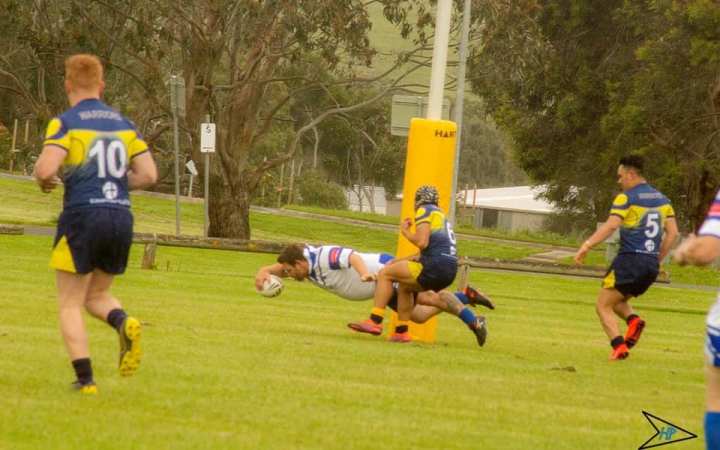
In fairness, it is an open secret that the various state bodies responsible for developing and growing the game across the country have been unhappy about resourcing, with the NSWRL and QRL taking the NRL to court in 2024.
However Goodman said that his experience dealing with NRL Victoria in facilitating the growth of the game in his region has been much different to Silva’s statement.
“In the last three years, NRL Victoria has not once reached out to me,” he said.
“If they plan on engaging with stakeholders in the near future, are they planning on including SA or will we continue to be ignored now they have taken the majority of teams from our already existing competition?
NRL Victoria oversees SA, but are we even in their thoughts?
While rugby league in metropolitan Melbourne continues to boom, with 17 senior clubs, and the Adelaide league remains stable at six sides, the regions have been left behind, and in fact have begun regressing.
The number of clubs in regional South Australia has plummeted from a peak of six in 2017 when the Spencer Gulf and Limestone Coast competitions were running to just one now, in the Knights.
Similarly, the number of clubs in country Victoria has fallen from 13 in 2022 to just seven this year, with the entire Sunraysia Rugby League competition folding for the second time after 11 seasons.
In that time, only the major regional centres of Bendigo, Geelong and Shepparton have gained clubs, with all three having past clubs fold prior to re-gaining sides.
Despite these mounting losses, Silva said the notion that the game is going backwards in regional Victoria and SA is more complex than a blanket statement.
“It is difficult to combine this into one statement that the game is ‘going backwards in regional Victoria’, as some regions have seen the game recede, but it is vibrant in others,” he said.
“Each region has its own localised and unique factors for their success or otherwise, the primary factor being local leaders working collaboratively with each other or otherwise.”
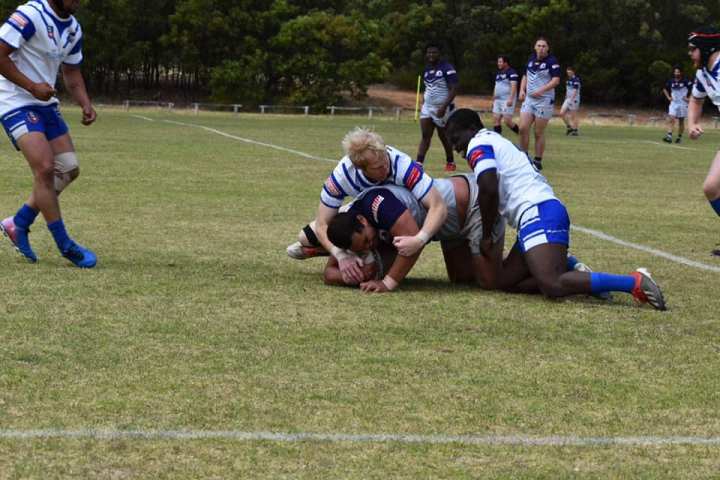
When asked as to why there has been no football played in the region for three years, Silva pointed to the combined factors of the pandemic and a lack of agreement between clubs on how the game in the region should look.
“There are a multitude of factors as to why there has not been ongoing club based rugby league in the region,” he said.
“During the pandemic, border restrictions and movement restrictions in general prevented any meaningful competition being played at the time.
“Since then the local rugby league communities have struggled to find common ground with each other on how to operate and what sort of competition they wanted to play.
“This is in addition to challenges to bring players back and those that did come back were challenged to commit to travelling to play opposing clubs.
“The loss of key local leaders in the game due to outside factors who previously had led the engagement of their own club members and constructively collaborated with other clubs for sake of the competition also added to the challenge to get the game going in a meaningful way.”
However, on the clubs’ side of things, the perspective on why things fell apart is very different.
While Goodman agreed with Silva’s statement that the pandemic was a big challenge for the game in the region, he pointed towards the competition schedule in the 2022 season as a bigger contributing factor to the competition’s demise.
“It’s all about support, everyone needed support after COVID, not just our area, but everyone needed a bit of support from the governing bodies, and everyone was struggling for volunteers, everyone was struggling for people to run the admin side of it, and if there was a little bit of help we wouldn’t have lost a couple of clubs.
“If there was a little bit of effort, they would have put together a draw in 2022 that was actually worth [something]
“That draw that the NRL put together for us in 2022, they put it together and for example, when Naracoorte were hosting, Mount Gambier is the closest team to them, they had the bye.
“So Naracoorte hosted, three Victorian teams came over to play, the only other South Australian team had a bye.
“When we went to Stawell, both South Australian teams played each other three times in Stawell, yet didn’t play each other once in South Australia, so your fans couldn’t watch you play in your own state essentially.
“[There were] two teams in Warrnambool, when Warrnambool hosted, one of them had a bye; when the other Warrnambool one [hosted], the other one had a bye.”
“Teams were fed up with the travel.”
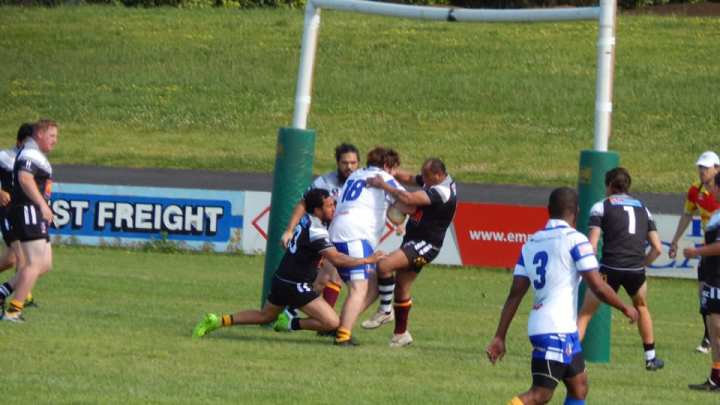
However, despite the obvious discord between the clubs and the governing body, an amicable resolution with NRL Victoria is needed for any potential new competition to begin.
When asked about the future of the game in these regions, Silva said that the governing body values the opportunity to grow or re-start the sport in these regions, but it will be more of a slow burn than the rapid growth seen in metropolitan Melbourne.
“NRL Victoria still very much values the opportunity in regional Victoria,” he said.
“The vision would be that there are competitions or hubs of rugby league in each of these regions.
“To achieve this will be a slow burn or long term view on success.
“This may be challenging for locals who wish it was happening now.
“In the simplest terms to execute, our approach will be to engage in locals who are the experts in their region and create an Advisory Panel to work strategically on what will work for their region.
“Should there be anyone interested in being involved they are encouraged to contact NRL Victoria directly.”
As for Goodman, he just wants competitive footy back for his beloved Knights, no matter what model the governing bodies choose.
“Having South Australian and Victorian teams in the comp will work, and if it’s run by NRL Victoria as the main body, who cares, no one has got any issues with that, not from the clubs’ side of things anyway.”
Despite all of the difficulties of the past three years, the Knights haven’t given up.
The club will be hosting 9-a-side games for men’s, women’s and junior players, with seven games for each age group.
Those wishing to get involved are urged to contact the club.
 Battlers For Bush Footy