
John Fitzgerald
After overseeing his club’s historic 2025 Woodbridge Cup title win Oberon Tigers’ coach Nic Barlow joined the shortlist of Oberon’s premiership-winning coaches and returns this year to lead his club once again, with most of last year’s winning team committing to the new season.
Barlow for a second year finds himself at the helm of one of the most decorated country rugby league clubs.
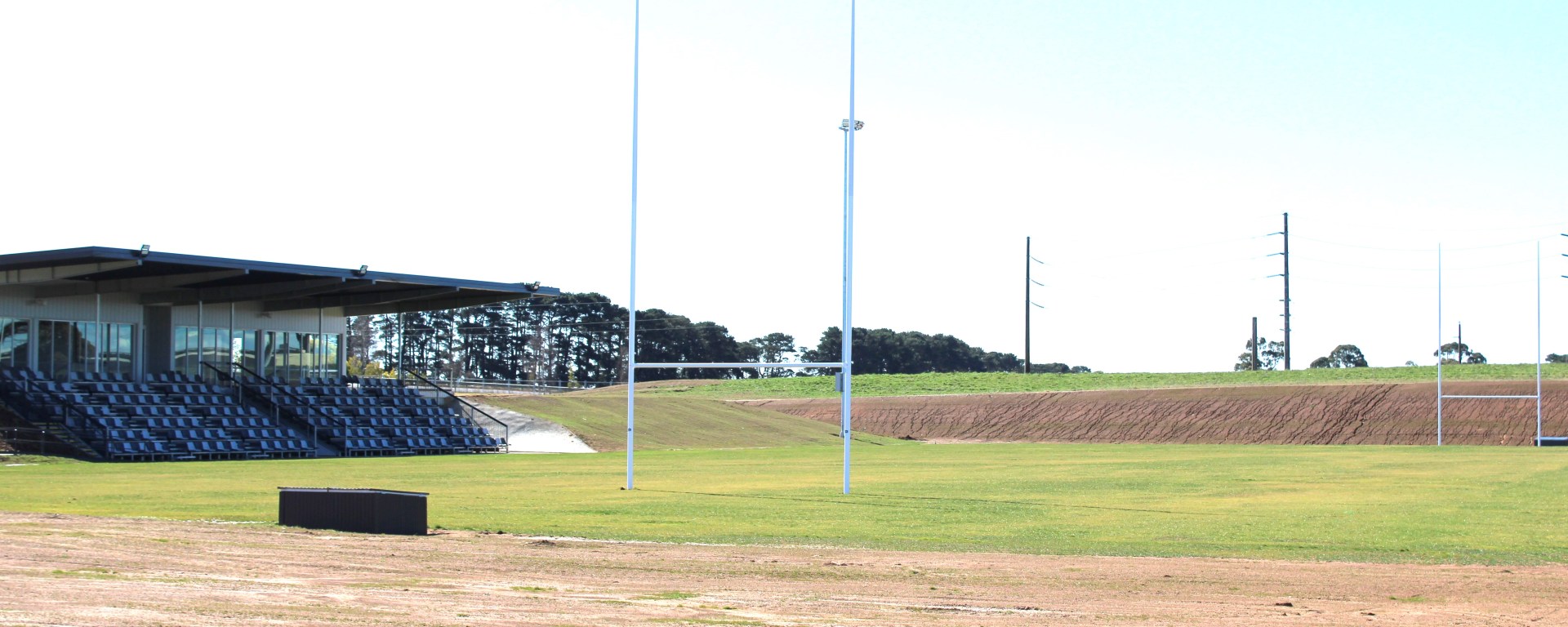
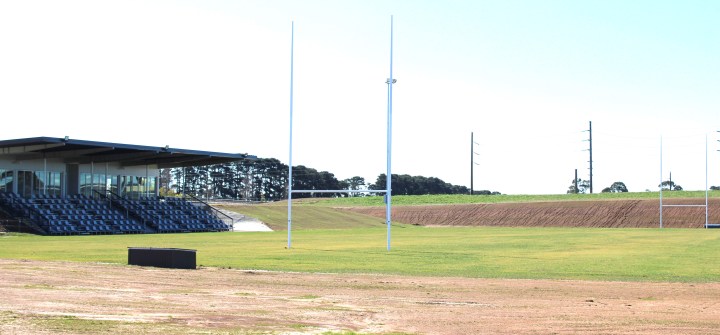
The premiers will change their home venue this year for the first time since 1947 and will make the move to their brand new complex one kilometre away on the O’Connell Road, taking with them the 2025 Woodbridge Cup and 78 years of unmatched history.
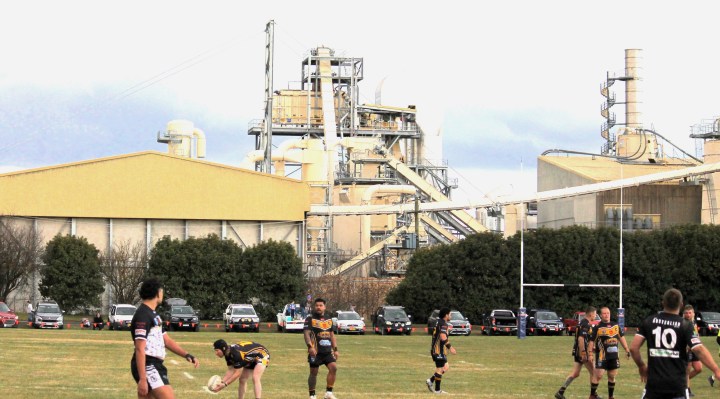
Since 1947 the Tigers had called the local sportsground their home but, dilapidated and outdated, and overshadowed by a massive industrial complex, the ground for years has struggled to provide comfortable accommodation for players and fans alike.
The ground surface left much to be desired, the on-site buildings being a small leagues club and a hotch-potch of ancient add-ons, and the factory buildings shading the ground crept gradually closer over the years looming claustrophobically five storeys over the northern end of the field.
Oberon Sportsground served its purpose well at the beginning and the small town had pride in their team despite the conditions it played under.
Temperatures around zero and below quite often greeted visiting teams.
Their big-town rivals, cities like Bathurst, Orange and Mudgee, with much larger populations and access to financial support from the many large businesses within their council areas, over many years had been able to improve their grounds to reflect their status and successes.
Rugby league in Oberon can trace its roots as far back as 1917 and 30 years later Oberon’s Tigers club, with their humble football ground, joined with their bigger opposition clubs in 1947 in the newly-organised Group 10 competition.
It took a little time for this small-town club to make its mark – and make a mark it then did.
Performing well above its weight, the Tigers team in 1958 began a record-breaking run of 13 grand final appearances over the next 14 years, missing just one but winning seven consecutive Group 10 titles along the way.
In the 1960s during the period of St George’s 11-straight premierships comparisons were made with the great Sydney team, and Oberon’s football team was referred to as the ‘St George of country football’.
Situated 30 minutes drive from Bathurst, and with a continuing high employment status, the club and its first grade side, prospered.
It was no coincidence that the Oberon Rugby League Club began its premiership success story with the acquisition of Tony Paskins in 1958.
Paskins was one of the best rugby league players to play country football.
He was getting on in football years after having played rugby union with Randwick in 1947 at 20 years of age before moving to England to play rugby league with Workington Town. He was considered good enough to play international representative football with and against some of the best players in the world.
On his return to Australia in the late 1950s he played with Eastern Suburbs before astutely being picked up by the Oberon football club. From Oberon in 1961 Paskins was selected to captain Combined Country to play the City team in the annual contest at the Sydney Cricket Ground.
His Oberon side was top heavy with talent even at that early stage and Paskins brought with him from Oberon teammates Ross and Vince Everingham and Norm Brown to play in the Country Firsts and Seconds against the formidable Sydney representative teams.
It was no fluke that Paskins led his team of ‘unknowns’ to a 19-5 win over City.
Paskins, alternating between five-eighth and centre, cut the City side to pieces that day. And his influence on his teammates was instrumental in the team’s upset result.
In 1962 he was again selected from the Oberon club to lead Country, and to prove a point, his side did it all over again, sending the City side home with its tail between its legs.
Paskins, with his wonderful skills, despite his age was the target of big-spending Sydney clubs, and he left Oberon after the 1962 season to return to Sydney to link up with Manly-Warringah.
Back at their Oberon base of Oberon Sportsground the Tigers club continued Paskins’ legacy, winning every Group 10 premiership until beaten in 1968 by just one point, 9-8, by Bathurst St Patricks, despite scoring two tries to St Pats’ one.
The club returned as winners in 1969’s 7-3 grand final win over Orange Ex-Services, led by Jock Schrader, Gary Harvey and Neville Kelly.
Winning the 1975 title gave Oberon a highly respectable 10 premierships since the beginning of the Group 10 auspiced competition began 28 years earlier.
Holding the highest status in Group 10 amongst clubs of the stature of the Bathurst, Orange and Lithgow clubs, Oberon, with their armful of trophies, should have been rewarded with an upgrade to their home ground, if not a total rebuild.
Instead, the Tigers’ home patch remained their beloved ‘cow paddock’.
Despite their remarkable exploits, being a small town did not allow the finances to improve their ground to reflect their status as one of the best country rugby league towns in country NSW.
More than 20 players who played Sydney football came through the ranks or were marquee players, the most recent of these credentialled players George Rose, Luke Branighan and Josh Starling.
Following their most successful period in the 60s and 70s in the first division competition the Oberon club, occasionally with low numbers, sometimes struggled to be competitive at the highest level, but won second division Midwest Cup titles in 2003 and 2020.
Now, with their latest Woodbridge Cup hardware, this one-time behemoth Western Division club with an unmatched history, the only club to have won Group 10, Midwest and Woodbridge Cup premierships, will finally get its proper recognition when they run on to their new sporting complex just up the road from the old ‘cow paddock’.
Generations of history will be taken by Oberon Tigers to their new home base, to commence the next stage of their rugby league life, appropriately with the Woodbridge Cup trophy as a tribute and a reminder of its wonderful previous achievements over 78 years.
With their new sporting complex, and with their historic three separate premiership trophies to their credit, the Tigers are at last rewarded with the sporting facilities a club of its stature should call its home.
Sixty years after the club’s golden era, the Oberon Tigers have been recognised with a ground which will reflect its wonderful history.
 Battlers For Bush Footy